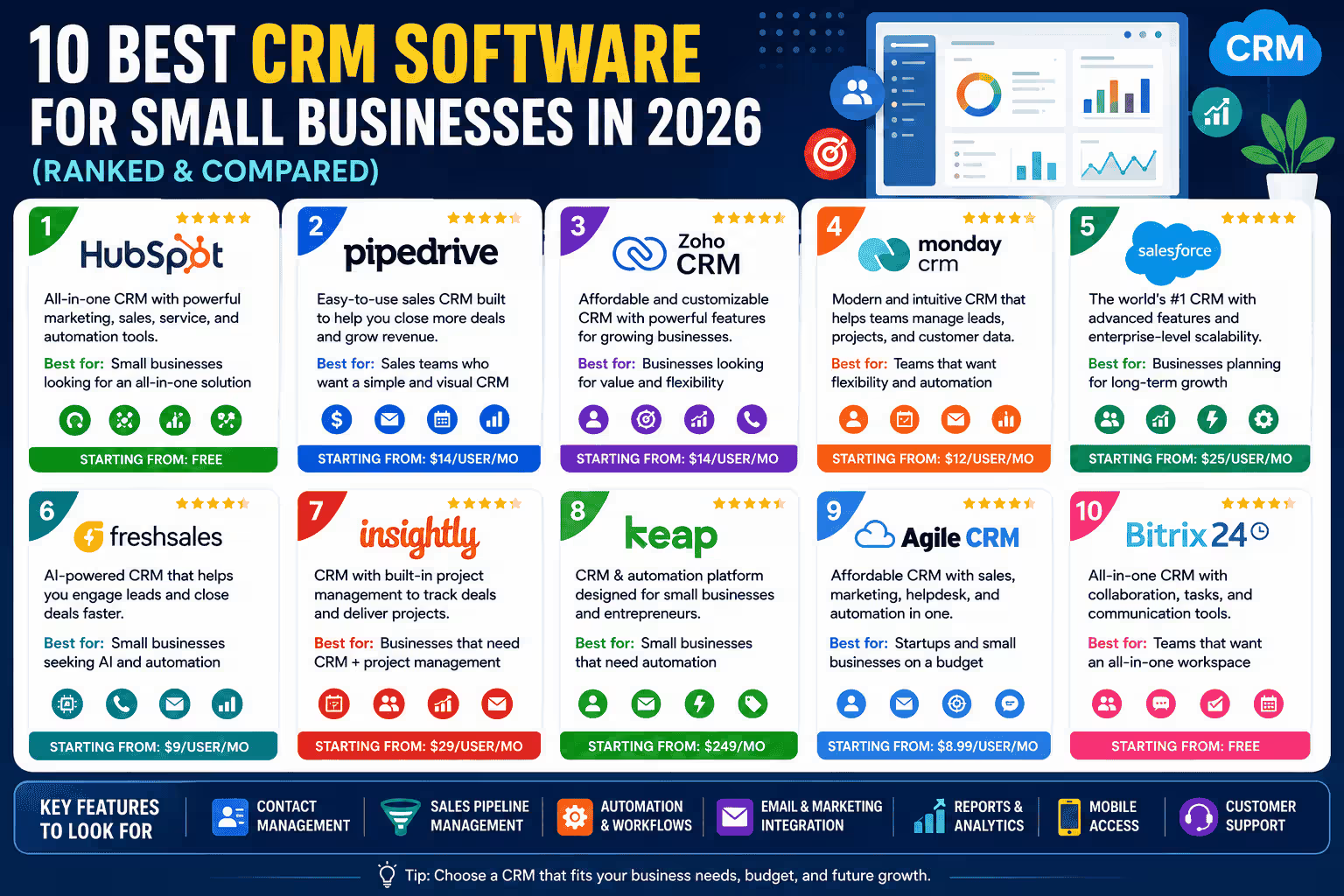
Customer relationships have become one of the most valuable assets for any business. Whether you own a startup, eCommerce store, digital marketing agency, consulting firm, insurance company, healthcare clinic, or real estate business, managing leads and customers efficiently is essential for long-term growth. In today’s competitive market, businesses that organize customer information, automate follow-ups, and improve communication consistently outperform those relying on spreadsheets or manual processes.
Customer Relationship Management (CRM) software has evolved significantly over the past few years. Modern CRM platforms are no longer just contact management tools. They now combine artificial intelligence, sales automation, marketing automation, customer support, reporting, forecasting, email integration, workflow automation, and detailed analytics into one centralized platform.
For small businesses, a cloud-based CRM helps eliminate repetitive work while ensuring every customer interaction is tracked properly. Sales representatives can monitor leads through every stage of the sales pipeline, marketing teams can automate email campaigns, managers can analyze team performance, and customer support agents can access complete customer histories from a single dashboard.
Artificial intelligence has become a major differentiator in CRM software during 2026. Many platforms now provide AI lead scoring, predictive sales forecasting, automated email generation, meeting summaries, chatbot integrations, and intelligent workflow automation that save businesses hundreds of hours every month.
Choosing the right CRM for small business depends on your company size, budget, sales process, and future growth plans. This guide compares the ten best CRM software solutions for small businesses in 2026 based on features, pricing, AI capabilities, ease of use, scalability, integrations, and overall value.
Quick Comparison Table
| CRM Software | Best For | AI Features | Free Plan | Starting Price |
|---|---|---|---|---|
| HubSpot CRM | Overall Best | Yes | Yes | Free & Paid |
| Salesforce Starter | Growing Businesses | Advanced AI | Trial | Paid |
| Zoho CRM | Budget Businesses | Yes | Yes | Affordable |
| Pipedrive | Sales Teams | Yes | Trial | Paid |
| Monday CRM | Project-Based Teams | Yes | Trial | Paid |
| Freshsales | AI Sales Automation | Yes | Yes | Free & Paid |
| Insightly | CRM + Projects | Yes | Trial | Paid |
| Keap | Marketing Automation | Yes | Trial | Paid |
| Agile CRM | Small Businesses | Basic AI | Yes | Affordable |
| Bitrix24 | Collaboration & CRM | Yes | Yes | Free & Paid |
Why Small Businesses Need CRM Software
As a business grows, customer information becomes scattered across emails, spreadsheets, messaging apps, notebooks, and employee memories. This creates missed opportunities, delayed follow-ups, duplicate work, and poor customer experiences. A CRM system centralizes every interaction so teams always know where each customer stands in the buying journey.
Modern CRM software also automates repetitive tasks such as sending follow-up emails, assigning leads, scheduling reminders, generating sales reports, tracking customer communications, and analyzing sales performance. Instead of spending hours updating spreadsheets, employees can focus on building relationships and closing more deals.
For businesses that want to increase revenue while improving customer satisfaction, investing in best CRM software is one of the smartest technology decisions they can make.
1. HubSpot CRM — Best Overall CRM Software
HubSpot CRM continues to be one of the most popular CRM platforms for small businesses because it combines ease of use with powerful automation capabilities. The platform offers an excellent free CRM software plan while providing advanced sales, marketing, customer service, and content management tools as businesses grow.
HubSpot automatically tracks emails, customer interactions, website activity, meetings, and sales opportunities. Its AI assistant helps write emails, summarize conversations, and prioritize leads based on customer behavior.
The platform integrates with hundreds of third-party applications including Gmail, Outlook, Slack, Shopify, Zoom, Microsoft Teams, and many popular accounting and marketing tools.
Key Features
- Contact management
- Sales pipeline tracking
- AI email generation
- Lead scoring
- Marketing automation
- Meeting scheduler
- Customer support tools
- Reporting dashboard
Pros
- Excellent free plan
- Easy setup
- Powerful automation
- Outstanding integrations
Cons
- Premium plans become expensive as businesses grow
Best For: Small businesses looking for an all-in-one CRM platform.
2. Salesforce Starter — Best Enterprise CRM Software
Salesforce remains the world’s most recognized CRM platform. Salesforce Starter brings enterprise-level CRM software capabilities to small businesses at a more accessible price point.
The platform includes lead management, opportunity tracking, workflow automation, AI-powered insights, customer analytics, and customizable dashboards. Businesses can automate repetitive sales tasks while providing employees with complete customer histories before every interaction.
Salesforce also offers one of the largest integration ecosystems available, making it suitable for businesses planning significant long-term growth.
Key Features
- Lead management
- Opportunity tracking
- AI sales insights
- Workflow automation
- Mobile CRM
- Advanced reporting
- Customer analytics
Pros
- Extremely scalable
- Enterprise-level features
- Excellent customization
- Powerful AI
Cons
- Learning curve for beginners
Best For: Businesses planning rapid growth.
3. Zoho CRM — Best Affordable CRM Software
Zoho CRM provides one of the best value-for-money CRM solutions for startups and small businesses. Despite its affordable pricing, it includes advanced automation, AI sales assistance, marketing campaigns, workflow automation, and customer analytics.
Its AI assistant analyzes customer behavior, predicts sales opportunities, and recommends the best actions for sales teams.
Zoho CRM integrates seamlessly with the broader Zoho ecosystem, making it particularly attractive for businesses already using Zoho Books, Zoho Desk, or Zoho Projects.
Key Features
- AI assistant
- Lead management
- Email marketing
- Workflow automation
- Sales forecasting
- Mobile application
- Analytics
Pros
- Affordable pricing
- Rich feature set
- Excellent automation
- Strong integrations
Cons
- Interface can feel overwhelming initially
Best For: Budget-conscious businesses that need enterprise-level functionality.
4. Pipedrive — Best CRM for Sales Pipeline Management
Pipedrive is designed specifically for sales teams that want a visual and easy-to-manage sales pipeline software. Every opportunity can be tracked from the first contact until the deal is closed, allowing businesses to identify bottlenecks and improve conversion rates.
The platform includes automation, activity reminders, AI sales recommendations, email integration, and customizable sales reports.
Key Features
- Visual sales pipeline
- Deal tracking
- Email integration
- AI recommendations
- Workflow automation
- Activity reminders
- Reporting
Pros
- Excellent sales pipeline visualization
- Very easy to use
- Great automation
Cons
- Limited marketing features
Best For: Sales-driven businesses.
5. Monday CRM — Best CRM for Project & Client Management
Monday CRM combines customer relationship management with project management software, making it ideal for agencies, consulting firms, and service businesses.
Users can customize workflows, automate repetitive tasks, manage sales pipelines, collaborate across teams, and generate performance reports from one workspace.
Key Features
- Custom workflows
- Sales pipeline
- Team collaboration
- Automation
- Project management
- Reporting dashboard
- Mobile app
Pros
- Highly customizable
- Modern interface
- Excellent collaboration
Cons
- Advanced automations require premium plans
Best For: Businesses managing both customers and projects.